
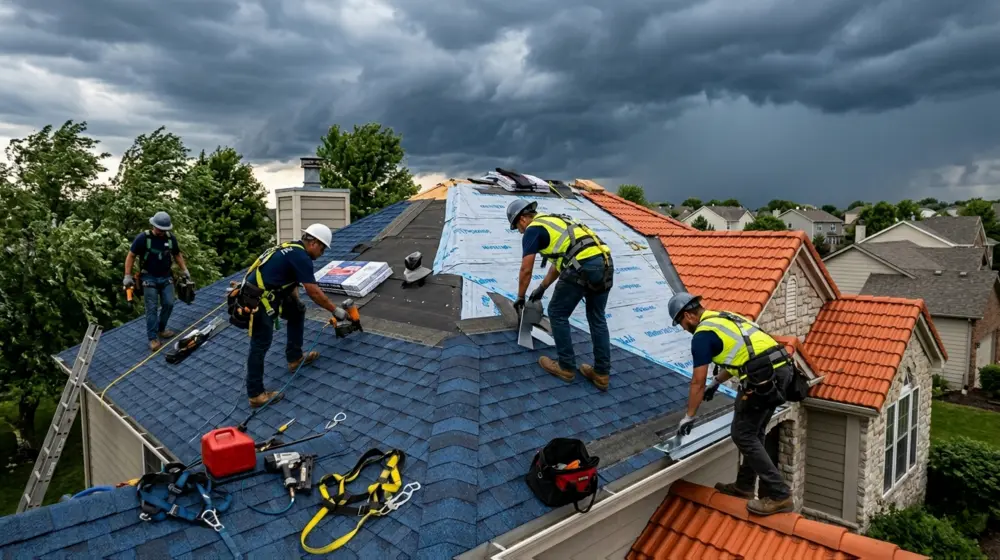
Roof storm damage is something no Connecticut homeowner wants to deal with. But ignoring the risk is far more costly than preparing for it. Storms here don’t give much warning. Wind, rain, hail, and ice can tear through a roof that wasn’t ready for them. Getting ahead of the problem, even by a season, can save you thousands and a whole lot of stress. This guide covers everything you need to know, from pre-storm preparation to post-storm assessment, so your roof is ready when the weather isn’t.
Know What Strong Weather Does to Your Roof
Storms affect roofs in more ways than most people expect. High winds, heavy rain, and hail each create unique types of storm damage to roof systems. Wind lifts and curls shingles at the edges. Rain exploits any weak point it finds. Hail leaves behind bruises that compromise shingle integrity over time.
According to FEMA’s guidance on wind-resistant roofing, strong winds can blow coverings off roofs and drive rain beneath shingles, exposing the underlying structure to moisture intrusion. Knowing this helps you prioritize where to focus your prep work.
Common signs that the storm damaged your roof include:
- Missing, cracked, or curling shingles
- Dented or bruised shingle surfaces from hail impact
- Granule loss in gutters or around downspouts
- Sagging or soft spots on the roof deck
- Flashing that has lifted or separated at joints
Storm Damage to Roof Prevention
The best time for preventing the storm from damaging your roof is well before dark clouds appear. A professional roof inspection in spring and fall catches vulnerabilities early. Loose flashing, deteriorated sealant, and aging shingles are all much cheaper to fix before a storm exploits them.
Here are the key prep steps every property owner should take:
- Schedule biannual inspections — early spring and late fall are ideal
- Clear gutters and downspouts of debris to prevent water backup
- Trim overhanging tree branches that can snap and puncture the roof
- Check attic ventilation for signs of moisture or improper airflow
- Reinforce flashing around chimneys, skylights, and vents
For commercial properties across Connecticut, proactive maintenance is especially important. Flat or low-slope roofs are more vulnerable to ponding water during heavy rain events.
Roof Storm Damage Assessment: What to Do After a Storm
Once a storm passes, a thorough damage assessment should be conducted as soon as it is safe to do so. Never climb onto a wet or structurally compromised roof. Begin at ground level with binoculars, then contact a professional for a closer look.
During your visual assessment, focus on:
- Shingle condition — look for missing pieces, torn edges, or visible lifting
- Flashing and seals — check for gaps or separation at roof penetrations
- Gutters and downspouts — look for dents, detachment, or granule accumulation
- Soffits and fascia — water staining or rot often signal a bigger problem underneath
Document everything with photos before any cleanup begins. This documentation matters significantly when filing an insurance claim.
Roof Storm Damage Repair: Acting Fast Matters
Delays in repairing the damage on your roof from storms allow water to penetrate deeper into your roof system. What begins as a few missing shingles can become a compromised deck, damaged insulation, and mold growth within days. Act immediately.
Do some first aid fixes on the damaged areas first while waiting for the roofing contractors. A quick response makes a whole lot of difference between a manageable repair and a complete tear-off.
A licensed, insured contractor should always perform roof repair for storm damage work. In Connecticut, verify your roofer’s Home Improvement Contractor (HIC) license before any work begins.
When Repair Isn’t Enough: Storm Damage Roof Replacement
Sometimes, a roof replacement is simply the smarter call. If your roof is pushing 20 years or the damage covers a significant portion of the surface, patching it repeatedly often costs more in the long run than starting fresh with a full replacement.
Signs you may need a full replacement rather than a patch:
- Widespread shingle failure across multiple sections
- Significant structural damage to the roof deck or rafters
- Repeated leaks in the same areas after previous repairs
- Insurance adjuster’s determination of a total loss
A proper storm damage roof restoration plan should include a full material assessment, underlayment replacement if needed, and upgraded flashing at all penetrations. This is also the right time to consider impact-resistant shingles, which hold up significantly better in future storm events. The Elite Roofing photo gallery showcases completed restoration work across Connecticut.
Don’t Let Winter Add to the Damage
In Connecticut, storm damage doesn’t stop when summer ends. Ice dams are a direct consequence of unaddressed storm damage to roof systems heading into colder months. Snow accumulation adds weight stress, and freeze-thaw cycles force water into any existing cracks. If your roof sustained damage in the fall, addressing it before winter is urgent.
Elite Roofing’s ice dam removal services address one of the most damaging and often overlooked winter roofing hazards in the region.
Act Now to Protect Your Roof from Extreme Weather Conditions
Taking a proactive approach, such as scheduling inspections, addressing minor repairs, and knowing what to do after a storm, significantly reduces your risk and your costs. Roof storm damage doesn’t wait for a convenient time. Be prepared before the next storm comes. Let Elite Roofing help you. We have been serving the Greater Connecticut area for over 30 years, helping homeowners and businesses protect their properties before and after severe weather.
To schedule an inspection or request an assessment, call us at (203) 439-7718 or visit our contact page.
Frequently Asked Questions
How do I know if my roof has been damaged after a storm?
Start your assessment from the ground. Grab a pair of binoculars and take a slow, careful look. Missing, cracked, or curled shingles are obvious red flags. So is lifted flashing or granule buildup in your gutters. And don’t forget inside. Water stains on your ceilings are often the first sign that something’s already gotten through.
Does homeowners’ insurance cover storm damage roof replacement?
Most standard homeowners’ insurance policies cover storm damage roof replacement when damage results from a sudden event, such as wind, hail, or a falling tree. Coverage depends on your policy terms, your roof’s age, and your deductible.
What’s the difference between roof damage repair and a full replacement?
Roof repair is appropriate when damage is localized — a section of missing shingles, lifted flashing, or a small puncture. A full roof replacement makes more sense when damage is widespread, the roof is already aging, or the structural deck has been compromised.