
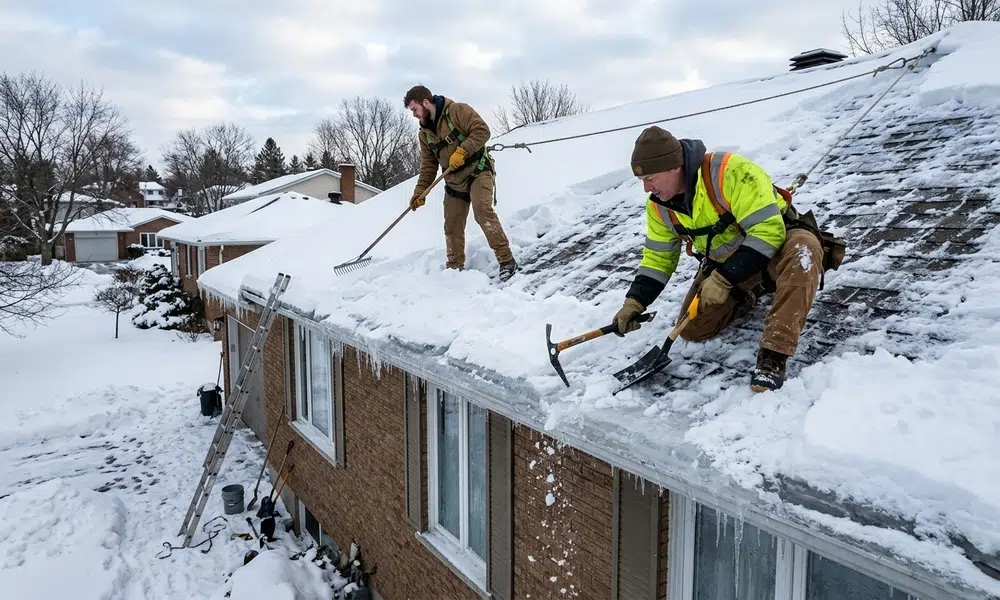
Ice dams on roof edges are one of the most destructive winter problems Connecticut homeowners face. They form quietly, grow fast, and cause thousands of dollars in damage before most people notice. A ridge of ice builds up along the eaves, traps melting snow, and forces water back under your shingles. From there, it seeps into your attic, walls, and ceilings. The good news is that most of these are preventable. You don’t need to wait for winter to hit before taking action. These five steps will help you stay ahead of it.
Contents
- 1 Causes of Ice Dams and Why Connecticut Homes Are Vulnerable
- 2 Step 1: Improve Your Attic Insulation
- 3 Step 2: Seal Attic Air Leaks Before Winter
- 4 Step 3: Make Sure Your Attic Is Properly Ventilated
- 5 Step 4: Clear Snow from Your Roof After Heavy Storms to Stop Ice Dams
- 6 Step 5: Know What to Do About Ice Dams On Roof That Have Already Formed
- 7 Protect Your Roof Before Winter Takes Over
- 8 Frequently Asked Questions
Causes of Ice Dams and Why Connecticut Homes Are Vulnerable
It all starts with your attic. When heat escapes from your living space into the attic, it warms the roof deck. Snow on the warmer upper section melts and flows toward the colder eaves, where it refreezes. Over time, that cycle builds a ridge of ice that traps more water with each thaw.
Connecticut winters are especially brutal for this. Temperatures swing above and below freezing repeatedly throughout the season. That freeze-thaw cycle is exactly what causes ice dams to grow larger and push water further under your shingles. Hartford County and New Haven County homeowners deal with this every year. The damage adds up fast.
Step 1: Improve Your Attic Insulation
The most effective long-term solution starts inside, not on the roof. According to the National Weather Service, most experts recommend at least R-30 attic insulation, with R-38 preferred in northern climates. Connecticut falls squarely in that range. If your attic insulation is thin or patchy, heat escapes and warms your roof deck every time temperatures drop. Proper attic insulation slows the heat transfer that triggers roof ice dams in the first place.
Step 2: Seal Attic Air Leaks Before Winter
Insulation alone won’t do the job if warm air is slipping through gaps. Air leakage carries far more heat into the attic than simple conduction through drywall.
Common leak points include:
- Attic hatch covers and pull-down stairs
- Recessed light fixtures
- Plumbing and electrical penetrations
- Gaps around chimneys and flue pipes
A professional energy audit can pinpoint exactly where your home loses heat. It also catches ventilation and insulation issues during routine roof maintenance inspections, often before the first snow falls. Sealing those gaps is critical for preventing ice dams on the roof.
Step 3: Make Sure Your Attic Is Properly Ventilated
Good ventilation keeps your roof deck cold and uniform. Ventilation works alongside insulation: these two systems depend on each other.
A well-ventilated attic needs:
- Clear soffit vents along the eaves
- Ridge vents or roof vents at the peak
- Unobstructed airflow from soffit to ridge
Blocked soffit vents are a common culprit in Connecticut homes. Snow and debris can clog them, cutting off the cold air that keeps the roof deck temperature even. Check them every fall before the season starts.
Step 4: Clear Snow from Your Roof After Heavy Storms to Stop Ice Dams
Managing snow load after a storm plays a bigger role in prevention than most homeowners think. The less snow sitting on your roof, the less there is to melt and refreeze at the eaves.
A long-handled roof rake lets you remove snow safely from the ground. Start at the eaves and work up. You don’t need to clear the entire roof. Removing the bottom few feet of snow near the edge reduces risk the most. Never use metal tools or chop at ice directly. That damages your shingles and flashing. You can also hire a professional to remove snow from your roof.
Step 5: Know What to Do About Ice Dams On Roof That Have Already Formed
Here’s the short answer: don’t chip at them.
Safe options for existing ice buildup include:
- Calcium chloride ice melt placed in a tube sock and laid across the dam
- Hiring a professional with steam equipment — the safest and most effective method
- Keeping interior gutters and downspouts clear so water has somewhere to drain
If water has already entered your home, schedule professional ice dam removal across Hartford County and New Haven County before the damage spreads.
Protect Your Roof Before Winter Takes Over
A little preparation now saves a lot of money in repairs later. If you’ve dealt with ice dams before, this winter doesn’t have to be a repeat. Elite Roofing serves Hartford County, New Haven County, and the Greater Connecticut area with inspections, maintenance, and professional ice dam removal. Call (203) 439-7718 or request a quote before the season starts.
Frequently Asked Questions
What causes ice dams on my roof and how do I stop them from coming back?
Ice dams form when heat escapes from your living space into the attic, warming the roof deck and melting snow. That meltwater flows toward the colder eaves and refreezes. The cycle repeats until a dam builds up and traps water under your shingles. To keep them from coming back, tackle the root cause — poor attic insulation and air leaks. Seal the gaps, beef up the insulation, and fix the ventilation so your roof deck stays cold and even. No temperature difference, no melting, no ice dams. These are long-term fixes, not seasonal band-aids.
Is it safe for me to remove ice dams myself or should I call a professional?
You can safely remove light snow from your roof from the ground with a long-handled roof rake. For actual snow removal that has already frozen solid, it’s best to call a professional. Chipping ice with metal tools can damage your shingles and flashing. Steam removal is the safest and most effective method, as it melts the ice without harming your roof. Calcium chloride in a tube sock laid across the dam can also help channel water off the roof. Anything more aggressive risks worsening the damage and creating a safety hazard.
Does homeowners insurance cover damage from roof ice dams in Connecticut?
Most standard homeowners insurance policies in Connecticut cover sudden, accidental water damage from roof ice dams: think ceiling collapse or water getting inside your walls. But if the damage comes down to neglect or skipped maintenance, don’t count on a payout. Move fast when you spot something. Photograph everything right away and call your insurer the same day. Stopping ice dams before they start is still your best move. And keeping up with regular roof inspections before winter gives you something solid to stand on if a claim ever comes up.