
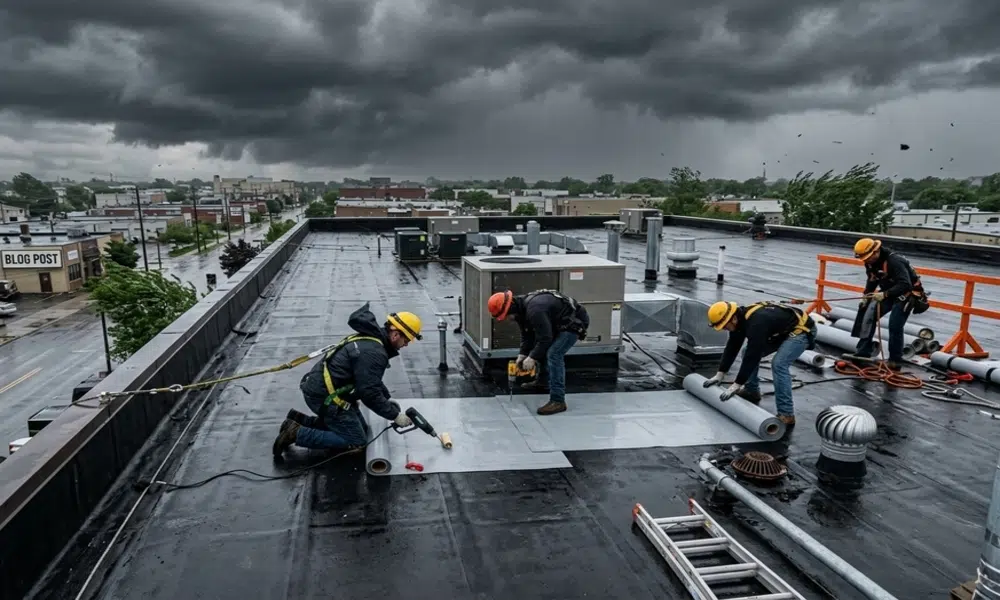
Roof collapse isn’t something Connecticut property owners can afford to brush off. Snow piles up, materials wear down, repairs get pushed back — and a roof gives out fast. We walked into buildings days after a storm and found roofs barely holding on. Elite Roofing has kept commercial and residential clients ahead of that risk for years, mostly by catching problems early. Below are six steps showing what to check and when. Get this right, and a small issue never becomes a disaster.
Contents
- 1 1. Inspect and Know Which Is an Indication of Possible Roof Collapse
- 2 2. Clear Snow Buildup Before It Becomes Dangerous
- 3 3. Learn From Connecticut’s Roofing History
- 4 4. Address Structural Weak Points Early
- 5 5. Schedule Routine Maintenance Every Year
- 6 6. Work With Licensed, Local Roofing Professionals
- 7 Protect Your Property Before It’s Too Late
- 8 Frequently Asked Questions
1. Inspect and Know Which Is an Indication of Possible Roof Collapse
Connecticut weather changes fast, and roofs pay the price. In August 2026, a storm with winds over 100 mph tore the roof off a Milford business near Cascade Boulevard. Connecticut Public reported that “part of the roof was gone” at the site. Knowing what to look for can help you act before real damage sets in. Watch for sagging ceiling tiles, cracked interior walls, and doors that suddenly stick. Bowed beams and popping sounds are red flags too. After any major storm, walk your property and schedule a professional inspection right away.
2. Clear Snow Buildup Before It Becomes Dangerous
Roof collapse snow damage is one of the most common causes of structural failure in Connecticut. For example, New England winters bring heavy, wet snow that adds serious weight to any roof. A single foot of wet snow can weigh several tons on an average commercial roof. Don’t wait until ice dams form or drains get blocked. Schedule removal before storms stack up, especially on flat or low-slope roofs. We offer reliable snow removal and ice dam removal built for tough Connecticut winters.
3. Learn From Connecticut’s Roofing History
Connecticut has seen dramatic roof failures before. The Hartford Civic Center roof collapse in 1978 remains one of the most studied structural failures in state history. A heavy snow load exposed design flaws in the arena’s steel roof, just hours after a college basketball game ended. That incident rewrote building codes statewide and pushed engineers toward tougher, stronger snow-load standards. It’s a reminder that even a sound-looking roof can still be at risk.
4. Address Structural Weak Points Early
Not every roof failure comes from snow or wind. Age, poor drainage, and deferred maintenance quietly weaken a structure over time. Earlier this year, a CT church roof collapse in New London made headlines when a historic steeple gave way. Thankfully, no one was hurt in that incident. Older buildings with original framing are especially vulnerable to this kind of damage. If your property shows cracks, water intrusion, or sagging, don’t wait for a storm. Have it checked now.
5. Schedule Routine Maintenance Every Year
Prevention is always cheaper than repair. A yearly roof inspection catches small issues, like minor leaks or worn flashing, before they spread. Commercial properties benefit most from scheduled checkups, since larger roofs can hide damage more easily. Commercial properties benefit most from scheduled checkups, since larger roofs can hide roof collapse snow damage until it’s too late. Elite Roofing’s commercial roofing team inspects seams, drains, and flashing to catch problems early. Residential owners should also have their roofs checked annually, especially before winter arrives. A consistent maintenance schedule extends your roof’s lifespan and lowers the odds of failure.
6. Work With Licensed, Local Roofing Professionals
Hartford, Litchfield, wherever in Connecticut — local know-how matters most. Elite Roofing has served the state for more than 30 years now, from small patch jobs to full roof replacements. We track roof collapse today and every day, staying ahead of emerging risks and code updates. Choosing a licensed, insured contractor gives you confidence your property is protected by people who understand Connecticut’s weather.
Protect Your Property Before It’s Too Late
Regular inspections, timely snow removal, and prompt repairs keep your roof — and everyone under it — safe. Most owners never expect a small issue to turn into a structural emergency. By the time cracks or sagging are visible, the damage has often been building for months. A roof collapse can happen with little warning, but most failures are preventable with the right care. Elite Roofing has spent over 30 years helping Connecticut property owners avoid costly roof failures. If it’s been a while since your last inspection, don’t wait for a storm to find the weak spots. Call us at (203) 439-7718 or request a free quote today.
Frequently Asked Questions
Which is an indication of possible roof collapse?
Several signs point to a possible roof collapse. Watch for sagging or bowed ceiling areas, cracks in walls, and doors or windows that suddenly stick. Creaking, popping, or cracking sounds during snow or wind events are concerning too. Water stains, sagging insulation, or visible daylight through roof boards suggest structural damage. On flat commercial roofs, pooling water is another red flag to watch for. If you notice any of these signs, leave the building and contact a roofing professional right away. Acting quickly can prevent injury and limit further structural damage.
When did the Hartford Civic Center roof collapse?
The Hartford Civic Center roof collapsed early on January 18, 1978. A heavy snowstorm dropped significant snow and ice onto the arena’s flat roof. This happened just hours after a UConn basketball game ended. The building was empty when the roof gave way, so no one was injured. Engineers later linked the collapse to design flaws in the steel space-frame structure. Piled-up snow only made the collapse worse than expected. Engineers still cite it today as a benchmark case, and it directly shaped Connecticut’s modern snow-load building codes.
Is there a roof collapse in Connecticut today?
Roof collapse today reports vary depending on recent weather across Connecticut. Heavy storms, ice accumulation, and aging commercial buildings all raise the risk during winter months and after severe summer storms. Rather than relying on breaking news alerts, property owners should focus on prevention instead. Scheduling regular inspections and prompt snow removal lowers the chance your building becomes tomorrow’s headline. If current conditions worry you, Elite Roofing can perform a fast inspection. We’ll assess storm damage and structural risk.