
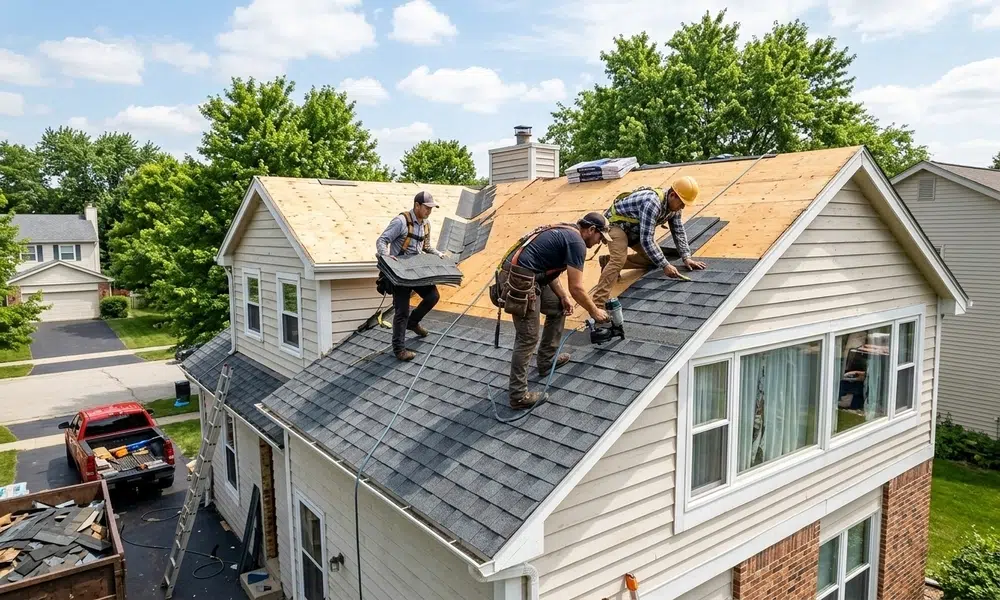
Roof replacement is one of the biggest investments a Connecticut homeowner will make and one of the most important. Most people don’t think about their roof until something goes wrong. By then, the damage has already spread. Connecticut’s winters are especially brutal on residential roofs. Freeze-thaw cycles, ice dams, heavy snow, and nor’easters all chip away at your roof year after year. Knowing the warning signs early gives you time to plan and act before a small problem turns into a structural nightmare.
Contents
- 1 Sign 1: Your Roof Has Passed Its Prime
- 2 Sign 2: Persistent Leaks That Keep Coming Back
- 3 Sign 3: Shingle Damage You Can See from the Ground
- 4 Sign 4: A Sagging Roofline That Needs Immediate Attention
- 5 Sign 5: Skyrocketing Energy Bills Without Explanation
- 6 Don’t Wait Until the Damage Is Done
- 7 Frequently Asked Questions
Sign 1: Your Roof Has Passed Its Prime
Age is the single most reliable indicator that roof replacement is approaching. Most residential asphalt shingle roofs last between 20 and 30 years. Biannual inspections can uncover cracked, warped, or missing shingles before they turn into serious problems.
If your roof is pushing 20 years old, it may not look visibly damaged but still need attention. The materials are simply breaking down. Granules wear off shingles, flashings loosen, and underlayment weakens over time.
Sign 2: Persistent Leaks That Keep Coming Back
One leak can be patched. Recurring leaks in multiple areas signal a deeper problem. When water finds its way in repeatedly, even after a roof repair, it usually means the roof system itself is compromised.
Look for:
- Water stains that reappear after rain
- Damp insulation in your attic
- Mold or mildew growth near the roofline
- Peeling paint or bubbling drywall on upper floors
Repeated leaks mean water has been sitting where it shouldn’t. That leads to wood rot, mold growth, and eventually structural damage.
Sign 3: Shingle Damage You Can See from the Ground
Visibly damaged shingles are hard to miss and easy to ignore without a thorough roof inspection. Curling edges, cracked surfaces, and bald patches where granules have worn away all mean your shingles are no longer doing their job. Connecticut homeowners in Hartford County and New Haven County face some of the harshest shingle wear conditions in the Northeast.
Granule loss is especially telling. Those granules protect the asphalt beneath from UV rays and moisture. Once they’re gone, deterioration speeds up fast. If you’re finding large amounts of grit in your gutters after every rain, your shingles are breaking down. That’s a sign to talk about new roof installation before the decking underneath takes damage too.
Sign 4: A Sagging Roofline That Needs Immediate Attention
A sagging roof is never a cosmetic issue. It’s a structural one. Sagging happens when the decking beneath the shingles absorbs moisture over time and begins to rot, or when the support structure weakens.
Signs of structural compromise include:
- Visible dips or waves along the roofline
- Soft spots you can feel from the attic
- Doors and windows that suddenly stick or won’t close properly
- Interior ceiling cracks near the roofline
If you notice any of these, call roof maintenance professionals immediately. A sagging roof is a safety issue.
Sign 5: Skyrocketing Energy Bills Without Explanation
A failing roof doesn’t just let in water. It lets out heat. When shingles deteriorate and attic ventilation is compromised, your HVAC system works harder to keep up, and your energy bills spike. This is one of the most overlooked signs of a failing roof.
But if your bills have been climbing steadily with no other explanation, your roof may be the culprit. Upgrading to modern roofing materials, including energy-efficient options like a metal roof, can significantly reduce heating and cooling costs over time.
Don’t Wait Until the Damage Is Done
A worn-out roof rarely announces itself until the damage is already expensive. Elite Roofing has been protecting Connecticut homes for decades. We serve Hartford County, New Haven County, and the surrounding areas with honest assessments and quality workmanship. If you’ve spotted any of the signs above, the smartest next step is to have a professional take a look. Roof replacement is never an easy decision, but catching it early always costs less than waiting. Call us at (203) 439-7718 or get a quote to schedule your inspection today.
Frequently Asked Questions
How do I know if I need a roof replacement or just a repair?
If the damage is isolated, a few missing shingles or a small flashing issue, a repair is often enough. But if your roof is over 20 years old, has multiple leak points, shows widespread shingle deterioration, or has a sagging roofline, replacement is the smarter investment. Repeated repairs on an aging roof add up fast. A professional roof inspection gives you an honest assessment of what’s worth fixing and what’s beyond patching. Most experienced roofers will tell you straight: repair buys time, but replacement solves the problem.
What are the most common roof types for Connecticut homes?
Most Connecticut homeowners go with asphalt shingles for good reason. They’re cheap, easy to find, and typically last 20 to 30 years. Want something that looks a bit better? Architectural shingles beat the standard 3-tab option on both looks and durability. Metal roofing has picked up steam, mostly for its 50-plus-year lifespan and resistance to ice dams and heavy snow. Slate, cedar shake, and flat membrane systems round out the list. The right pick comes down to your budget, your home, and how long you plan on staying.
How often should I schedule roof maintenance in Connecticut?
Aim to do it twice a year: once in spring after winter weather and once in fall. Around here, freeze-thaw cycles, ice dams, and nor’easters make that upkeep worth it. Between visits, check your attic after big storms and keep the gutters clear of debris. Catching a loose shingle or small flashing issue early can save you from a costly leak later. Had a bad storm rolled through? Most roofers will tell you it’s worth an inspection no matter the season.